Facebook AI Slop
Shrimp Jesus. Grandmas with impossible birthday cakes. “Made it with my own hands.” Here's what AI slop on Facebook is, why your feed is full of it, and the 7 signs that give it away.
125
AI Slop Pages (Stanford/Georgetown)
100Ms
Of Exposures Farmed
7
Signs to Look For
Contents
If you've scrolled Facebook lately, you've seen it: a photorealistic image of an elderly woman beside a birthday cake nobody attended, captioned “Nobody wished me happy birthday.” A soldier saluting a hand-carved wooden sculpture. A child standing in floodwater holding a sign. The images are technically impressive, emotionally manipulative, and completely fake. This is AI slop — and Facebook has become its single biggest distribution channel.
This guide breaks down what Facebook AI slop actually is, the economic machine behind it, and the seven concrete signs that let you spot it in under five seconds.
Saw a suspicious caption or AI comment?
Paste the text into our detector and get an instant, explainable read on whether it reads like slop — no sign-up, runs entirely in your browser.
Check text in the Slop Detector →1What Facebook AI Slop Actually Is
Facebook AI slop is mass-produced, AI-generated content — mostly images, increasingly video — posted not to inform or entertain but to harvest engagement. The point isn't the picture. The point is the like, the comment, the share, and the algorithmic reach that follows. As The Conversation explains, these images are built to trigger a fast emotional reaction, paired with strange, manipulative captions.
The genre's mascot is Shrimp Jesus — surreal images of Jesus fused with shrimp and other sea life that went viral in 2024 and became internet shorthand for the whole phenomenon. But shrimp Jesus is the harmless end. The same playbook produces fake disaster victims, fabricated veterans, and invented child prodigies, all engineered to make you stop scrolling and react.

“Shrimp Jesus” — the surreal AI image that became shorthand for the whole genre.
The tell: impossible anatomy, sensational religious bait, zero artistic intent
The tell that unlocks everything
Researchers found the same captions recycled across unrelated Pages: images of elderly people, amputees, and infants captioned “No one ever blessed me,” and images of people beside artwork captioned variations of “Made it with my own hands.” Once you notice the templates, the entire genre becomes obvious.
Source: Harvard Misinformation Review
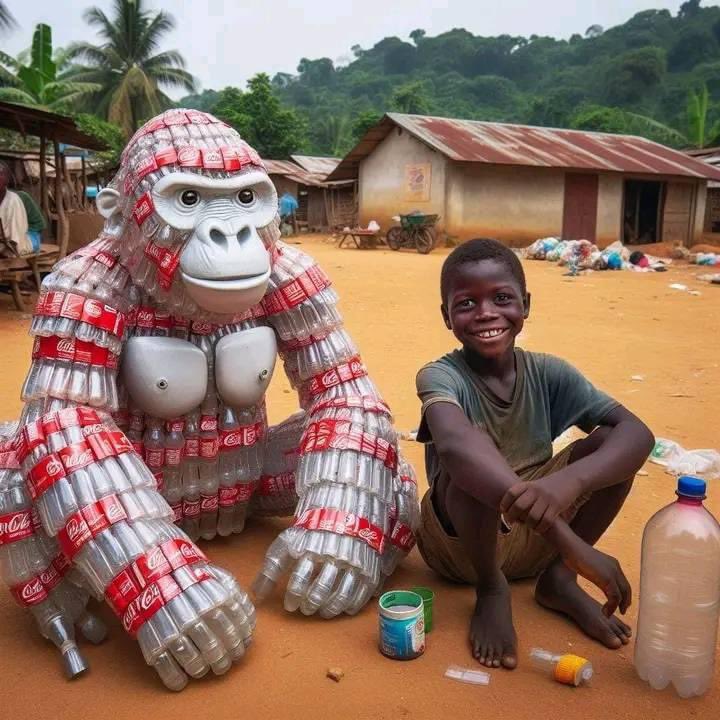
The “Made it with my own hands” template — a child that never existed beside art that was never made.
The tell: recycled caption reused across unrelated Pages, fabricated emotional hook
2Why Facebook Specifically
AI slop concentrates on Facebook for one reason: incentives. The feed rewards engagement regardless of quality, and creator-bonus programs have historically paid out on reach. When it costs almost nothing to generate a tear-jerking image and the platform pays for the resulting clicks, content farms do the obvious thing — at industrial scale.
Facebook Pages studied that each posted at least 50 AI-generated images — collectively they drew hundreds of millions of exposures, and one top post alone reached 40M views
much of this content is produced by overseas operators in countries including India, Vietnam, Pakistan, Thailand, and Indonesia, churning out dozens of images a day
Source: 404 Media / Gizmodo
cluster around religious, military, political, and 'general pathos' themes (suffering children, lonely elders) — the emotions most likely to force a reaction
Source: Harvard Misinformation Review
audiences built on harmless AI slop are later sold or redirected to scams, fake news, and political manipulation — the engagement is the product
Source: Gizmodo
“Half the posts were AI images of seniors showing off birthday cakes they supposedly baked themselves. The point was never the cake. It was the comment.”
— on Facebook's AI slop economy, Fast Company
3The 7 Signs of Facebook AI Slop
No single sign is proof. But Facebook AI slop almost never shows just one — spot two or more and you're looking at it.
Physics that doesn't work
Hands with too many fingers, glasses that melt into wrinkles, sandals fused to feet, water that flows uphill, light with no source. AI renders surfaces beautifully but still fails at how objects actually connect.
Text that turns to gibberish
Zoom in on any sign, banner, or label in the image. AI-generated text often dissolves into warped, meaningless letterforms — historically one of the most reliable tells, though newer models render text better, so use it alongside the others.
Recycled bait captions
'Made it with my own hands.' 'No one ever blessed me.' 'Why does nobody care?' The same lines appear word-for-word across unrelated Pages. Real people don't share a script.
Page name has nothing to do with the post
A Page called 'Nature and Animals' posting AI Jesus images, or 'The Newstoday' posting carved-vegetable sculptures. Mismatched Page identity is a classic content-farm signature.
Engagement bait built into the post
'Type Amen.' 'Nobody will share this.' '99% won't comment.' The post openly begs for the exact interaction the farm is paid for. Genuine content rarely needs to.
Emotional whiplash themes
Suffering children, lonely veterans, ignored elders, miraculous recoveries. Slop leans on religion, military, and pathos because those emotions short-circuit your skepticism fastest.
A flood of bot-like comments
Generic praise ('So beautiful!' 'God bless!') from accounts with no photos and stolen-looking names, often posted within seconds of each other. The comment section is as synthetic as the image.
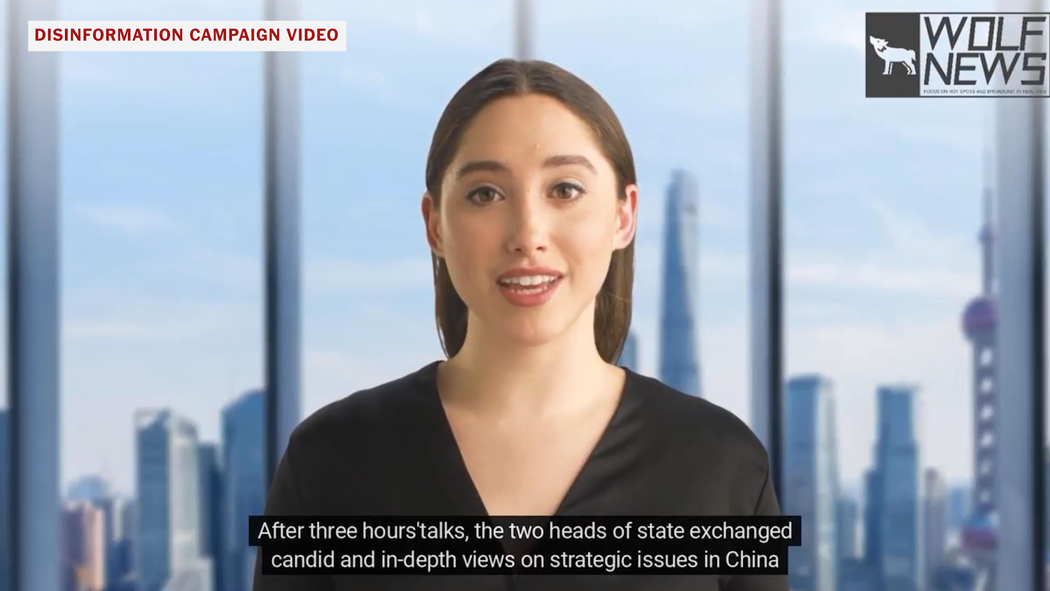
Slop is moving from images to video — AI 'news anchors' deliver fabricated stories built to look trustworthy.
The tell: too-smooth face, lip-sync drift, a 'reporter' with no traceable identity
Coming soon
One-click check: is this image AI slop?
Right now you have to eyeball the seven signs yourself. We're weighing an image checker that flags AI-generated Facebook images automatically. Want it built?
Vote for it →Today, our detector reads text — paste a suspicious caption or comment and it works instantly.
4What to Do When You Spot It
The worst thing you can do is engage — even an angry comment is the reaction the farm is paid for. Instead: don't comment, don't share, don't react. Use the post's menu to select “Hide” or “Report” so Facebook sees the negative signal. If a caption or AI comment seems off, you can paste the text into a detector for a second opinion.
The deeper fix is training your own eye. The seven signs above work on the open web too — the same patterns power AI slop in search results, on YouTube, and in product reviews. For the full visual catalogue, see our annotated gallery of real AI slop examples, and for the language of slop, the Slop Taxonomy.
Facebook is just one front. For the cross-platform playbook — images, video, and writing — read our complete 2026 guide to spotting AI slop.
5Frequently Asked Questions
Why is Facebook full of AI slop?
The feed rewards engagement regardless of quality and creator programs pay on reach, so content farms mass-produce reaction-bait AI images. A Stanford/Georgetown study found 125 Pages doing exactly this, drawing hundreds of millions of exposures.
How can I tell if a Facebook post is AI-generated?
Look for broken physics (fingers, melted objects), gibberish text in the image, recycled captions like 'Made it with my own hands,' Page names unrelated to the post, and engagement-bait lines. One sign is suspicious; two or more is a strong signal you're looking at slop.
What is Shrimp Jesus?
The nickname for a wave of surreal AI images — Jesus fused with shrimp and sea life — that flooded Facebook in 2024. It became shorthand for Facebook AI slop: absurd images built purely to farm likes and comments.
Is Facebook AI slop dangerous or just annoying?
Both. Most is harmless bait, but the same Pages build audiences later sold or pivoted to scams and misinformation. A Stanford/Georgetown study (in the HKS Misinformation Review) documented scammers using AI images specifically to grow audiences before monetizing them.
Sources
- DiResta & Goldstein, HKS Misinformation Review — the Stanford/Georgetown study of 125 Pages, recycled captions, exposures, and the audience-growth-to-monetization pipeline.
- Fast Company — “Facebook's AI slop hellscape is already here” — the birthday-cake and craftsperson image economy, mismatched Page names.
- Gizmodo — “Facebook's Twisted Incentives Created Its AI Slop Era” — how creator-payout incentives drove the flood.
- The Conversation — “What is AI slop?” — academic overview of why fake photos and videos fill social feeds.
- r/FacebookAIslop — the active community cataloguing live examples as they appear.
Catch slop without leaving the page
Install the free SlopDetector Chrome extension — select any text, right-click, and get an instant slop score. 100% local, your text never leaves your browser.
Not Sure If a Caption Is Real or Slop?
Paste the text into the Slop Detector for an instant, explainable read — with the exact phrases that triggered it highlighted. Runs in your browser, no sign-up.