AI Slop on YouTube
About 1 in 5 Shorts now contain AI content, and kids' feeds are the worst-hit of all. Here's where YouTube AI slop concentrates, the tells that give it away in motion, and what to do about it.
21%
Of Shorts Sampled
278
AI Channels Found
63B
Est. Views/Year
57%
Kids-Category Density
Contents
YouTube runs on watch-time, and AI slop is engineered to capture it cheaply. The result: a platform where a Kapwing analysis found roughly 21% of Shorts carry AI-generated content, and where whole channels exist only to pump out synthetic video. This is the video-specific companion to our complete guide to spotting AI slop.
See a suspicious title, description, or comment?
AI slop videos come wrapped in AI slop text. Paste the title, description, or a comment into our detector for an instant read on whether it's filler.
Check text in the detector →1The Scale of the Problem
of YouTube Shorts sampled contained AI-generated content — from AI voiceovers to fully synthetic clips
Source: Kapwing, Nov 2025
YouTube channels identified as dedicated to AI-generated content in a single 2025 study
Source: ReelNReel
estimated annual views across those AI-dedicated channels — proof the economics work at scale
Source: ReelNReel / Kapwing
ad revenue earned by a single AI-slop channel (FUNTASTIC) that passed 500M views with near-zero human input
Source: NPR
“One channel. 500 million views. $9,000 a month. Almost no humans involved.”
— the FUNTASTIC case, via NPR
2The Two Danger Zones
YouTube AI slop concentrates in two formats where the platform's design most rewards it.
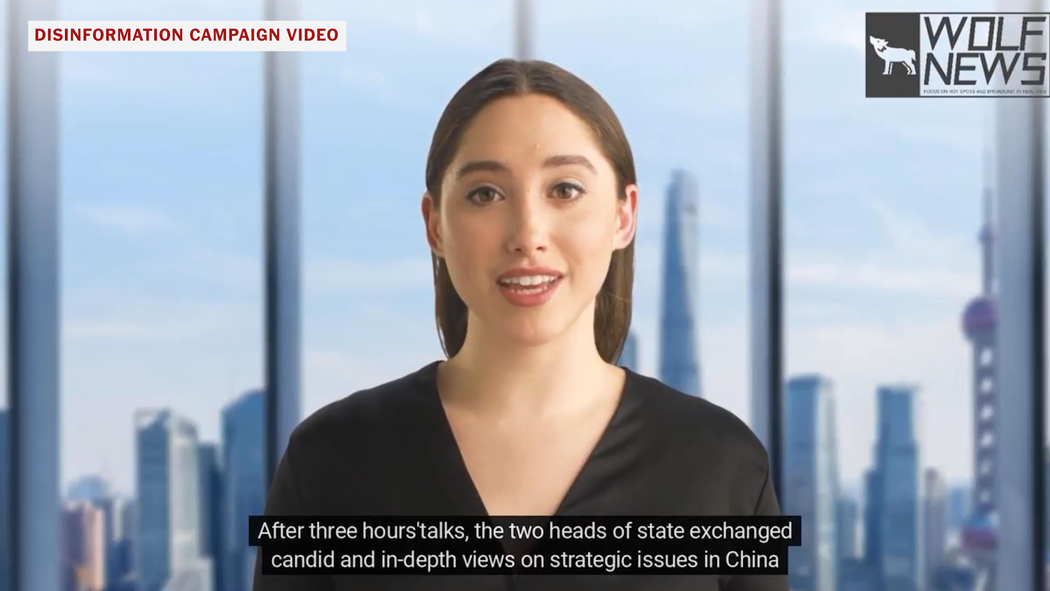
AI 'news anchors' deliver fabricated stories built to look authoritative — some channels reach billions of views before intervention.
The tell: too-smooth face, lip-sync drift, a reporter with no traceable identity
Zone 1 — Shorts
The 60-second, autoplay, infinite-scroll format is perfect for slop: no depth required, just enough novelty to stop a thumb. Low production cost plus algorithmic distribution equals a flood — hence the 21% figure.
Zone 2 — Kids' videos
The most alarming zone. Children watch on autoplay and don't judge quality, so AI slop farms watch-time from them with almost no resistance. A Kapwing report found the Kids category had the highest AI-slop density of any category (about 57%). For the deeper look at what this does to children, see What is AI baby slop? and the parent's guide to spotting it.
3The Signs of an AI-Generated Video
Video adds motion, and motion exposes AI's weak spots. Watch for these:
Lip-sync drift
A 'presenter' whose mouth doesn't match the words. The clearest tell for AI news anchors and talking-head slop.
Objects that morph
Items change shape, count, or color between frames; backgrounds shift when nothing should move. Watch hands and small props.
Stock AI voiceover
A flat, uncanny narrator with odd emphasis and no breaths, reading a script that never says anything specific.
Firehose uploads, no identity
A channel posting dozens of near-identical videos daily, generic name, no real creator, comments full of bot praise.
Gibberish on-screen text
Pause on any title card, sign, or caption baked into the video — AI text warps into nonsense on a freeze-frame.
4What to Do About It
Don't watch it through — watch-time is the currency, and even a few seconds feeds the algorithm. Use “Don't recommend channel” and “Not interested,” and report videos that violate the synthetic-media rules. For children, use YouTube Kids' approved-content mode rather than autoplay, and check what the algorithm is serving.
The text wrapper around these videos — titles, descriptions, pinned comments — is often slop too. Run it through our detector, browse the annotated examples gallery, and learn the cross-platform tells in the complete guide.
5Frequently Asked Questions
How much of YouTube is AI slop?
A Kapwing analysis (Nov 2025) found ~21% of sampled Shorts contained AI content. A 2025 study identified 278 AI-dedicated channels drawing an estimated 63 billion views a year. YouTube's CEO named managing AI slop a priority in early 2026.
How do you spot an AI-generated YouTube video?
Look for lip-sync drift, objects that morph between frames, stock-sounding AI voiceover, gibberish on-screen text, and channels firehosing near-identical uploads with no real identity. Two or more together is a strong signal.
Why is there so much AI slop in kids' videos?
Kids' content is cheap to mass-produce and children watch on autoplay without judging quality, so it farms watch-time efficiently. A Kapwing study found the Kids category had the highest AI-slop density of any category.
Is AI slop against YouTube's rules?
YouTube limited mass-produced/repetitive content in 2025 and requires disclosure of synthetic media, but enforcement is uneven and much slop still monetizes. Reporting and not watching are the most direct signals you can send.
Sources
- Kapwing — YouTube Shorts AI Content Study — the 21%-of-Shorts figure.
- Kapwing — TikTok AI Slop Report — Kids-category density (~57%).
- NPR — the FUNTASTIC channel: 500M views, ~$9K/mo, near-zero human input.
- ReelNReel — 278 AI-dedicated channels and the ~63B annual-views estimate.
- Futurism — the spread of AI slop in children's content.
- PBS NewsHour — context on AI slop, including video.
Catch slop without leaving the page
Install the free SlopDetector Chrome extension — select any text, right-click, and get an instant slop score. 100% local, your text never leaves your browser.
Is That Title Real or Slop?
AI slop videos travel on AI slop text. Paste any title, description, or comment into the Slop Detector for an instant, explainable read.